

A new B2B podcast reached #1 on Google and AI Search within seven days, without ads, social promotion, or an existing audience. This case study breaks down the strategy that drives demand for B2B and enterprise companies.
Top 20 Custom Software Development Companies in 2026

The need for software development is becoming more and more common for so many companies, no matter what field they are a part of, and ready-made, basic software so often does not provide the best solutions for these businesses.
Custom software that is specifically tailored to suit your businesses needs is in growing demand, with the market valued at over 29 billion in 2023. This is simply because with software that provides you with individualized online experiences, solutions that account for growth potential, and streamlined system integration, there are greater benefits for your business.
Here you will find not only the top custom software development companies, but all of the information you need on software development agencies, including how to choose the right one for your business.
Provided Services
Depending on the specific company you choose to work with, the services provided will be different. The typical expectation for a good agency is that they will help you to realise your ideas by creating products that run without additional upkeep after launch. Essentially the firms are responsible for the whole lifecycle of the software.Here is a further look into some key services:
Discovery Services
The conceptualisation of a project can be difficult, so agencies providing services to help you through the discovery phase are there to use techniques like data analysis of the market, competitors and online potential customers or leads to determine what it is specifically that you actually need.
From this analysis they can also best inform you about which features will be most beneficial for you.
Development
Actually developing the product depending on the best software development solutions for the specific kind of business, whether it’s an older business with more processes or a startup, is a key service that you will need. Another component of development is building the application for different platforms like mobile, web and desktop, that are adapted to fit individual workflow requirements.
Integration
Ensuring that your new custom software works alongside the software you already have is critical to optimize workflow and prevent certain data from becoming lost or inaccessible. Integration with common tools like analytic platforms, ERPs and CRMs can be achieved through many different kinds of connectors, which keeps your software running seamlessly together after you have added something new.
Engagement
UX/UI design services are all about optimizing a product by making it engaging, easy to learn and convenient, allowing you to cut down on the time it takes to train people in using the software, and prevents resistance to it. Prototype building and adjusting the visuals and wireframe are part of this process.
Quality
Quality services ensure that the product is secure and that it is performing well. Load testing, manual and automatics testing, and security testing is conducted to make sure there are no bugs, and the software will run properly when it is actually being used.
Maintenance
Making sure that your product is functioning properly after it has launched is important, and support is provided by software product modernization companies that help you not only to fix problems with the software, but keep it up to date. This happens through updates and the enhancement and expansion of features like integrations and scaling infrastructure.
Operation & Development and the Cloud
To stop your business growth from being limited by software infrastructure, agencies are able to improve processing speed and elasticity by setting up CI/CD pipelines, containerized environments and cloud infrastructure so that it’s not isolated to one server.
Types of Software Development Agencies

Boutique Firms
The first type of software development agency is a boutique firm, which is typically a small agency. They typically work with start-up companies who are looking for a service that is customized to their business, and focuses on large scale, creative solutions.
They have an expertise in very specific customizations and niche or design-heavy work, meaning they are often specialized in engagement services like UX/UI and branding, and they work with specific technology, like AI, and create minimum valuable products.
Working with a smaller firm means having the advantage of extreme personalization and opportunities for collaboration. There are also drawbacks though, like a potential lack of knowledge about technology and scalability.
Technical Partners
The next type of agency, technical partners, are able to take over the entire software development process from start to finish dealing with everything from early data analysis, market research and strategizing to the actual design and building process all the way up to the launch of the product, and beyond when it comes to keeping it up to date.
If your business does not have internal resources to deal with technology or project management, or you want an experienced partner to help with turnaround time and scalability, then having a technical partner is probably the right call.
The benefits of working with a technical partner are that you have guidance from professionals, making the whole process easier, especially since they have all of the services that you will need, and the knowledge on scalability when conducting future planning. The costs however, and the lack of control, might be drawbacks for you when considering this.
Staffing Agency
The third type of agency is a staffing agency, which specializes strictly in providing trained staff who then work to develop, design and test software under the authority of the client themself.
If your business already has internal resources to dedicate to a software development project then this is a good option, because the business does not have to relinquish any control. The flexibility and lower costs can be a benefit as well.
The drawbacks to this however can be that these agencies do not provide strategy services or project and design management, meaning the quality and the timeframe of the project is dependent on your businesses leadership.
Choosing the Right Type
Deciding which type of agency is right for you depends mainly on how much of the project you are capable of taking on internally and what it is that you want to achieve with the custom software.
There are four essential questions to ask when choosing which is right for you:
1. Is development all that you need?
If you are looking for more than development and instead want an agency equipped to provide services like analysis, testing, and UI/UX design, boutique firms might be the way to go because they can provide such a customized service. Staffing firms would not in this case meet all of your needs.
2. Do you think you will develop an in-house team in the future?
If this is the case, then you are probably using a custom software development agency to build a foundation for your product, so you will want to work with either a boutique or managed agency so your team can stay involved and make the transfer of information easier.
3. Are you looking for guidance?
When it comes to product strategy you might not be sure what to prioritize in order to optimize your product. A technical partner would be the best choice here because they have the experience and personnel to help you formulate strategic plans and utilize the market data that they collect for you.
4. Will you have the capacity to manage all the needed resources?
If you have a management team that you feel can handle incoming staff that would be provided by a staffing agency, then this is the way to go. If not, it would be best to choose a boutique agency or a technical partner who can manage their work internally.
What to Look for in a Custom Software Development Company
After you have decided which type of agency best suits your business’s needs, it is time to pick a specific company to develop your custom software. When you are doing this, there are some key components that you should check to see if that company is right for you.
Feedback - reading the testimonials of previous clients can help you assess the quality of the agency
Experience - if the agency has experience with software development in your specific industry, they can provide valuable insights into your project
Support - using an agency that is willing to provide upgrades and maintenance past the launch date means your product will last longer
Communication - knowing essential information about the agency like where they are located, how they will contact you and how quickly they will respond is important. Working with a responsive agency with similar hours as your business can be very beneficial
Expertise - this is as simple as determining if the agency has experience with platform, languages and frameworks that you want to use
Development Methodology - many companies will follow methodologies like Scrum, DevOps or Agile for the best results. Asking about the tools they use to manage their projects and how adaptable they are helps to get a better idea of the agency
Case Studies and Portfolio - looking at examples of past work can give you an idea of the standards and quality of an agency and how much value they create with their software
Top 20 Custom Software Development Companies
1. ISU Corp
ISU Corp takes the top spot for their ability to build reliable, high quality custom software with strong AI capabilities. They work closely with clients as a technology partner, helping shape the product from the early planning stages through development and ongoing support. Their experience with organizations like General Electric, Manulife, and the University of Waterloo demonstrates their ability to deliver secure and scalable solutions across financial services, industrial operations, and technology sectors.
With over 20 years of experience, they offer full end-to-end development along with legacy upgrades, cloud solutions, digital transformation, and AI integration. ISU Corp is a strong choice for mid-size and enterprise companies, as well as funded startups, that want reliable delivery, clear communication, and long term support.
Based in: Canada & U.S.A
2. Instinctools
Known for taking on complex projects, Instinctools prioritises communication with the client and the discovery phase to make sure your product is meeting your business needs.
With a specialisation in enterprise applications, custom software and cloud solutions, they have done projects for businesses in education, finance, healthcare and automotive industries, and are able to provide management and technical services.
Based in: Germany
3. Naked Development
Taking the client through the entire development process from start to finish and prioritizing design and marketability as well as technology in order to boost engagement is what sets Naked Gun apart from other agencies.
Specialising in mobile app and software solutions they provide design, UX/UI, development and after-launch services, making this a good firm for businesses in the social platforms, e-commerce and consumer apps industries, especially because of their focus on marketability.
Based in: California
4. Unified Infotech
Engagement is a huge priority of Unified Infotech, and because of this, they are able to use their expertise to inform the design and usability of your software in order to improve adoption rates, especially for customers.
Specialising in mobile app development and web solutions, their product strategy and UX/UI services make this a great company for businesses in e-commerce, healthcare, fintech or media. They create reliable products where the technological decisions are impacted by strategy.
Based in: New York
5. IIH Global
IIH Global creates apps, software and websites for businesses in e-commerce, IT and gambling, and they take care of the whole development process, providing testing services and support along with development services.
Headquarters: England

6. BoTrees Technology
BoTrees Technology prioritizes collaboration with the client, meaning that they are well equipped to guide you through the creation process of your mobile, web or AI based application, even if you are a startup.
With a foundational knowledge of machine learning frameworks, and common ones like Python, they have technical skill and a capacity to help with scalability for businesses in fintech, retail, logistics and healthcare.
Based in: U.S.A, India
7. Simform
Simform deems itself a digital project engineering company and they thrive by appealing to businesses in the logistics, retail and healthcare fields because of their ability to produce a product where the code, structure and technological decisions are informed by strategy.
No matter the size of your project, its global delivery model ensures that big programs are achievable, accounting for scalability.Simform is a good option for well established companies and startups, and they provide software development along with DevOps and AI specific services and cloud migration.
Headquarters: U.S.A
8. Dashbouquet
Well-versed in various frameworks, Dashbouquet provides software testing and UX/UI design services as well as web and mobile app development. They are a good fit for smaller businesses in e-commerce, HR, finance and healthcare.
Headquarters: Estonia
9. Closeloop Technologies
Working well with established businesses and startups alike, Closeloop Technologies has a focus on software and custom app development, all while building lasting relationships with their clients by staying on top of maintenance and updates to keep your product up to date.
Common services they provide deal with web platforms, usability, cloud integrations, mobile apps, scalability and industry tools.
Based in: California
10. Anadea
Anadea is well known for their ability to evolve along with your ideas and needs as they change throughout the creation of your software, and they pride themselves on the long-term relationships they build with clients as they provide a high quality service at a lower cost.
They specialize in mobile apps, e-learning platforms and custom business applications which appeal to businesses in education, healthcare, finance and real estate, and they also work with a variety of frameworks (Python, Java, etc).
Based in: Europe
11. Rocket Code
Rocket Code integrates AI into the software that they develop, making this a great company for you if efficiency is a core goal within your software. They specialize in web and mobile app development, online marketing strategies and the development of AI platforms.
Headquarters: Mexico
12. Computools
Specialising in healthcare software, loT, enterprise solutions and fintech, Computools is set apart by their prioritisation of data analysis and product strategy, and their ability to use the information they learn from those sources to guide the creation of the project, all while remaining as cost-effective as possible.
Based: Worldwide
13. ScienceSoft
ScienceSoft focuses on software integration and web and mobile app development. They provide IT consulting, data analytics, AI, cloud solutions, cybersecurity and custom software development services.
Headquarters: Texas
14. BairesDev
BairesDev prides themselves on the technical expertise of their staff and the speed and adaptability of their service. They specialize in custom software, web and mobile app development; AI; DevOps; and cloud computing.
Headquarters: San Francisco
15. Intellectsoft
As a company with seniority in the custom software development field, Intellectsoft is able to provide services throughout the whole process, from prototypes to after the launch, utilizing their knowledge in loT and blockchain, all to create a platform that is engaging, scalable, and different from your competitors.
They have worked with businesses in hospitality, fintech, construction and healthcare in both a consulting capacity and in mobile application development.
Headquarters: Palo Alto
16. Mercury Development
Mercury Development is one of the most senior companies on this list, and they specialize in web and cross-platform applications, and IOS and Android mobile app development. Due to their extensive experience, they are equipped to provide reliable, high-quality services to a wide variety of industries.
Based in: U.S.A
17. Leanware
Leanware is a great option for any smaller business looking for a company that can evolve along with your business needs, and with a lot of experience in different frameworks like React and Python, product engineering and cloud solutions.
The main advantages of working with them is that they are constantly taking machine learning into account throughout development, and they outsource software development to somewhere close to your location, making communication easier.
Based in: U.S.A
18. SDLC Corp
SDLC Corp has gained a positive reputation among startup companies for prioritizing emerging technologies, specifically providing services dealing with blockchain integrations and cross-platform app development and AI. Due to their modern approach, they are popular with businesses in e-commerce, real estate and healthcare.
Based in: India
19. Vega IT
Vega IT focuses on creating scalable products that offer effective solutions. They provide software planning, design, development and testing services that allow for the formation of software that enhances the workflow and processes of businesses in many industries.
Headquarters: Serbia
20. Queppelin
Queppelin is well known for their focus on developing web and mobile applications, XR solutions, AR/VR and metaverse platforms all impacted by a future-facing outlook. With a specialisation in new and immersive technology this is an agency equipped to deal with cutting-edge software concepts.
Based in: India
For B2B Leaders Looking to Scale
If you're a B2B leader or tech company investing in custom software, there's a good chance you're also thinking about brand authority, trust, and demand generation. One of the strongest ways to support a software product launch or elevate your company’s market positioning is through a branded B2B podcast.
At Jony Studios, we help B2B companies turn their expertise into an ongoing podcast and a content engine that drives blogs, social clips, and thought leadership without adding extra work to your team.
If you're looking to strengthen your digital presence alongside your software growth, this can be a powerful next step.
Conclusion
Custom software development is only going to continue to grow in popularity for businesses in every industry, so knowing how to pick the best company for your needs has never been more important.
After reading this list you now know a variety of companies who can meet your expectations and personalize software to help you optimize processes and workflow!
Did you find this list helpful? If you did, let me know!
Written by Eva Geimer
-
Jony Studios is a content marketing agency specializing in B2B podcasting and audiobook services. They have worked with many clients, from startups to larger organizations such as Penguin Random House, Amazon, University of Waterloo, Freakonomics Radio, and many others.

How to Add a PDF Companion to Your ACX Audiobook
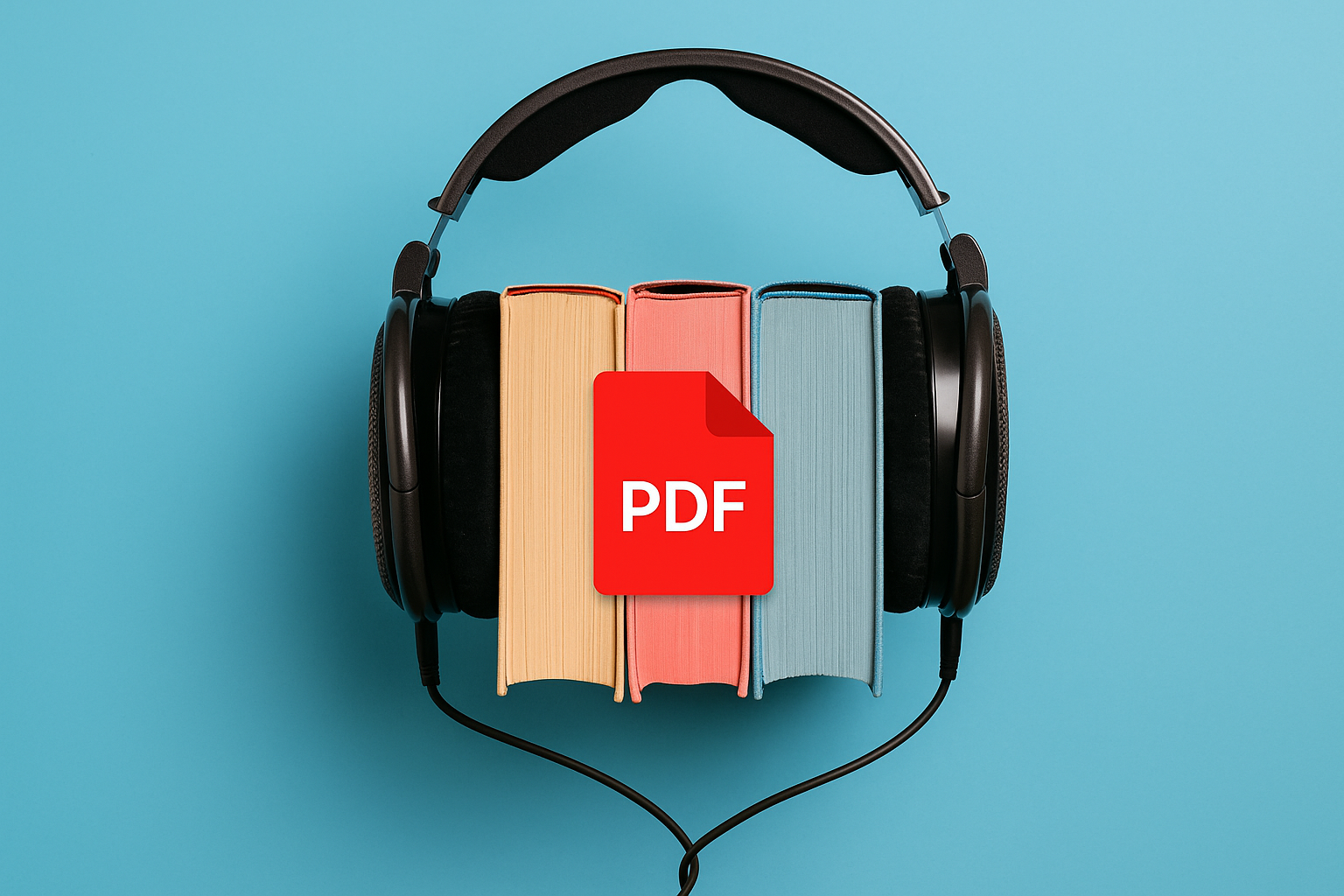
Turning your book into an audiobook is a great way to reach a wide audience, and adding a PDF companion document only increases the impact and appeal that your book will have on a reader.
While it may sound like a daunting task to create an audiobook in the first place, partnering with an audiobook production company means that you are working with people with professional experience, who can take care of the whole process from production to distribution.
Your final product will be polished, and up to the standards of popular distributors, allowing you to expand your reach.
Introduction

It might seem like producing your book in the audiobook medium is not conducive with the content or structure of your work, but even if you have included additional visual content in your original work, for most books, this is not the case.
If your book includes pictures, charts, graphs, maps or any other information or resources that cannot be conveyed through audio, this should not stop you from turning your book into an audiobook. You should instead create a PDF to accompany your audiobook that contains all of this content.
A PDF companion document, or, an accompanying PDF is a document that is provided to the consumer alongside your audiobook. This PDF allows the listener to refer to things like visuals that would have been included in a physical copy of the book.
ACX supports companion PDFs, but there are specific guidelines you must follow in order for the document to meet the ACX requirements.
What ACX Allow/Official Rules
Following the ACX requirements is essential when creating your audiobook’s accompanying PDF document, and the first important thing to remember is that you can only have one PDF per title.
The PDF must be sent as a single file, so you have to include all of the content that you wish to accompany your audiobook here. The file itself has to be 99 MB or smaller or else it will not be accepted by ACX.
You have to then compress your PDF into a ZIP file version which is 25 MB or smaller so that you can send it in an email to ACX. In order to contact ACX by email you will have to use your registered ACX email account.
When you email ACX to send them your document, it is important that you remember to indicate when you want the PDF companion document to be available. You can choose to make it available either before the purchase of your title or after the purchase of your title, meaning that the document would then show up in the consumers library.
Keep in mind that your title must be in production for you to be able to send the file for your PDF companion document.
How to Create a Good Companion PDF
When making a companion PDF there are lots of different components that you can add in, and this supplementary content can include things like charts, tables, extra visuals, resources for your readers, a glossary, a reading guide, maps and so much more. Whatever extra content that you cannot convey in an auditory medium can be included here.
The format of your PDF is very important when it comes to clarity for your audience. There are 5 components that you should add to keep things organized:
1. The first is a title page. Here you will include your book’s title, copyright information, and an additional title indicating that this is not just a written copy of your work, but an additional supplementary document.
2. Next is a table of contents. This component is only necessary if your accompanying PDF is long enough that you need a way to navigate through the content.
3. Then you should organize your supplementary content by chapters. Under each chapter’s name you should include the images, charts, footnotes, links, and all other visual content pertaining to that specific chapter.
4. At the end of the PDF you should include an additional section, or backmatter, with information about you, the author, including a short biography and your contact information.
5. Lastly, including a call to action where you prompt your reader to review the book, this being on ACX or elsewhere, can help with audience engagement, and with getting your book noticed.The way that you present your content in the document is going to change the readability, so keeping in mind the above formatting can help.
Additionally, content presentation can alter the file size of your PDF, and to stay at or under 99 MB you might have to optimize your PDF in order to reduce your file.
There are two simple ways to do this:
The first is to remove unnecessary fonts. When you have many different fonts and those fonts are embedded so that they appear correctly on every device, the font file takes up space in the PDF
The second thing you can do to reduce is to change the resolution and colour of your images. If your images are in colour or are of a high DPI (dots per inch), this is taking up space.
Instead consider switching to a lower resolution, monochrome or grayscale, or both for your images.
Another thing you could try is compressing your file using a PDF compressor tool, like the one created by Adobe Acrobat.
The final thing to keep in mind is making sure that your companion PDF reads well and makes sense to others. Once you are sure your PDF meets all of the above requirements, run it past someone with fresh eyes to test out its compatibility with your audiobook.
Technical Steps / How to Send to ACX
Compressing your PDF file into a ZIP file might feel like one of the most complex steps in preparing your PDF companion document, but following these instructions will help you to do it, whether you have a Mac or Windows.
Mac ZIP File Instructions:
1. In either a Finder window or on the desktop, control-click on the file
2. When the shortcut menu appears select Compress
3. The compressed file will have the same name as the original, but with a .zip extension on the end
Windows ZIP File Instructions:
1. Right-click or press and hold on the file
2. Select the Send to option
3. Then select Compressed (zipped) folder
4. The zipped folder will have the same name, so if you wish to rename it you have to right click on the file and select Rename
When you are sending the ZIP file by your registered ACX email it is important to remember to include the name of your audiobook, and to let ACX know that you want this file to be a PDF Companion document for your book. You also must include if you want the PDF to be available before purchase or after purchase.
Common technical mistakes to avoid when preparing or sending accompanying PDFs include:
1. Not checking that the ZIP file is 25 MB or smaller
2. Sending a PDF file in the email to ACX instead of a compressed ZIP
3. Sending the email with your PDF companion document using your personal email account instead of your ACX registered account
For official ACX submission guidelines, visit the ACX Help Center.
When & Why to Use Companion PDFs
A companion PDF can be great for both nonfiction and fiction audiobooks.
For nonfiction books, an accompanying PDF can sometimes feel necessary when things like data sets, graphs and charts are integrated into the physical book.
By including these visuals for your audiobook listeners you can adjust the text being read by the narrator, allowing them to point the listener to the supplementary document in order to maintain the full intended effect of your book.
For fiction novels, including materials like maps or footnotes can be important for immersion and world building, and this is the optimal way to ensure your listeners are not missing out on this.

Further, adding supplementary material to your audiobook can be a great tool to increase its marketability.
Oftentimes, people are deterred from purchasing audiobooks because they enjoy the visual and physical aspect of a printed copy. However, by attaching a companion PDF you can incentivize this portion of your potential audience to purchase your book in this medium.
This is all because you are offering them something visual in combination with the convenience of an audiobook. This comes all the while you’re benefiting from the increased popularity of the auditory medium, which has recently become so popular because of its easy accessibility.
This way you can appeal to the interests of the most people possible. Not only are you enhancing the experience of your readers by giving them access to materials that provide an additional layer of information and engagement, you are increasing the discoverability of your book because of its broad appeal.
Whether this be through visual diagrams in a nonfiction work or materials that prompt further contemplation like reading guides in fiction, the materials in an accompanying PDF can give you the edge over the competition.
When a Companion PDF Isn’t Needed
Even if your book includes visuals, tables, or figures, creating a full companion PDF isn’t always necessary.
For shorter books or titles with only a few visual elements, it can be just as effective to keep things simple. In these cases, adding a short note narrated in both the Opening and Closing Credits works well, for example:
“Please note, all tables and figures referenced in this audiobook can be found in the print or ebook edition.”
This approach not only streamlines production and reduces costs but also encourages listeners to explore your print or ebook version for a more complete visual experience. It’s a practical alternative that still keeps your audiobook professional, polished, and listener friendly.
Hosting Your Companion PDF on Your Website
Another great option is to host your companion PDF directly on your own website rather than relying solely on ACX. This gives you more control, allows you to make updates anytime, and helps drive traffic back to your author or business platform.
You can include this website mention in your audiobook’s description or naturally in the Opening or Closing Credits. For example, most publishers use a straightforward approach such as:
“Visit yourwebsite.com/book-title to download the companion materials.”
For business or personal brand titles, you can make it slightly more engaging, for instance:
“You can download the companion PDF and bonus resources at yourwebsite.com/book-title”
or
“For additional visuals and worksheets, visit yourwebsite.com/book-title.”
Each variation works well depending on the tone of your audiobook, use the one that fits your style while keeping it clear, professional, and listener friendly.
Real Examples / Case Studies
One example of an audiobook that uses a large companion document successfully is The Farmer’s Wife by Helen Campbell.
The PDF Companion document to this audiobook is 100 pages long and it includes recipes; tips about different foods, meals and overall cooking enhancement; and additional resources.
Cookbooks are a great place to include a companion PDF, so that the listener can follow along with the recipe audibly as they go along step by step, but they are also able to have the precise ingredient amounts and specific instructions laid out for them too, so that they are not constantly having to rewind for essential information.
Another example is Philip and Erin Ulrich’s Begin, which is a children’s book with a 150 page companion PDF. Included here are colouring pages, vocab words and games which make it more engaging and stimulating because the child can engage in both visual and auditory learning, making it a more diverse educational tool.
An important lesson overall to take away is in how to best reference your companion PDF within the audio version of your book.Altering the manuscript, especially in nonfiction audiobooks, can be imperative to making sure your supplementary material is flawlessly integrated into your audiobook, and those with the most experience know the best ways to do this.

Authors who have produced audiobooks, and audiobook narrators who have worked through the production process, can be great resources for finding out the best ways to do this in your specific book.
FAQ / Troubleshooting
Q. What if my PDF is over size limits?
A. Since ACX only allows for one PDF Companion document, you will not be able to submit multiple files, meaning that you will have use methods like lowering image resolution, removing image colour and/or removing unnecessary fonts to optimize and reduce the size of the file, or you can try to use a compressor tool.
Q. What image formats work best?
A. You can use JPGs, PNGs or TIFs to get the best results. For the resolution of your images it is recommended that they be 72 dpi or higher.
Q. What happens if I forgot to ask for “before purchase”?
A. If you forget to indicate in your initial email that you want the PDF Companion document to be available before purchase you should email again using your registeredACX email and specify that you want the PDF attached to your audiobook to be available before purchase.
Q. What is the typical turnaround time?
A. The ACX processing time is typically around 10 business days, meaning your PDF Companion document will be received around this time after it has been sent.
Conclusion & Action Steps
Creating a PDF Companion document can help you to make your audiobook stand out, and vastly increase the value that consumers find within it. Adding visual supplementary material, no matter the genre of your book, means that readers are getting to experience your work to its fullest potential.
Using these instructions, tips and tricks, making a PDF Companion document has truly never been easier. Here’s a detailed checklist to make sure you have done all of the right things:
1. The five formatting components (title page, table of contents - optional, chapter organization, backmatter and CTA) are present
2. The file is optimized. Consider font, images, resolution and manuscript alteration for better integration.
3. The PDF file is 99 MB or lower
4. The PDF file has been made into a compressed ZIP file that is 25 MB or lower
5. An email has been sent to ACX using your ACX registered account including the ZIP file, the name of your audiobook, and whether you want the document to be available before or after purchase
Since the formatting of companion documents can be so essential for optimization, planning your companion document early in production is the best way to make sure you are happy with the final results of your PDF.
By following this checklist you can successfully add a PDF Companion document to your ACX audiobook, improving your book with the supplementary material that can help to support your auditory content!
Did you find this guidance helpful? Let me know!
Written by Eva Geimer
-
Jony Studios is a content marketing agency specializing in B2B podcasting and audiobook services. They have worked with many clients, from startups to larger organizations such as Penguin Random House, Amazon, University of Waterloo, Freakonomics Radio, and many others.